
Technology
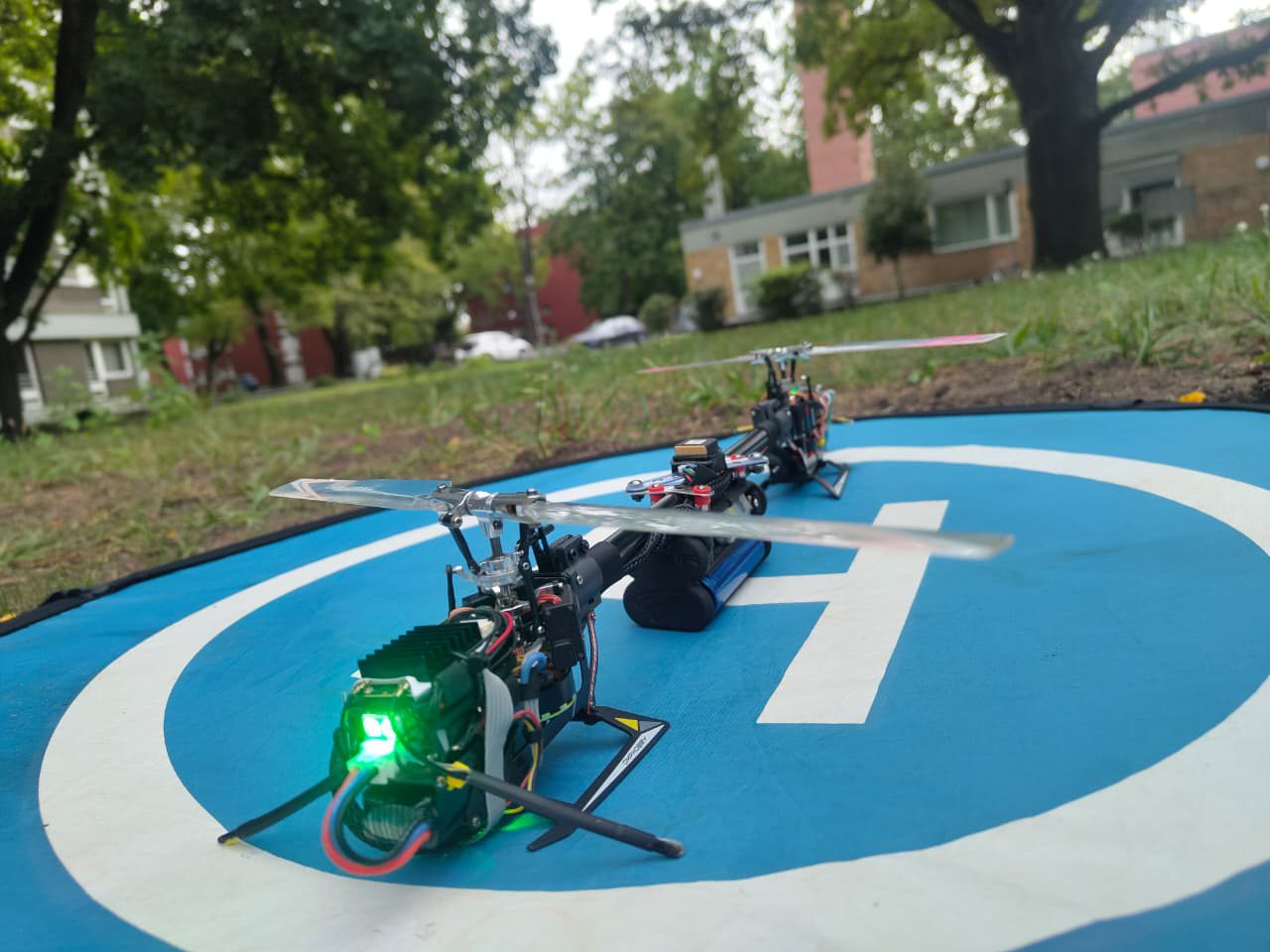
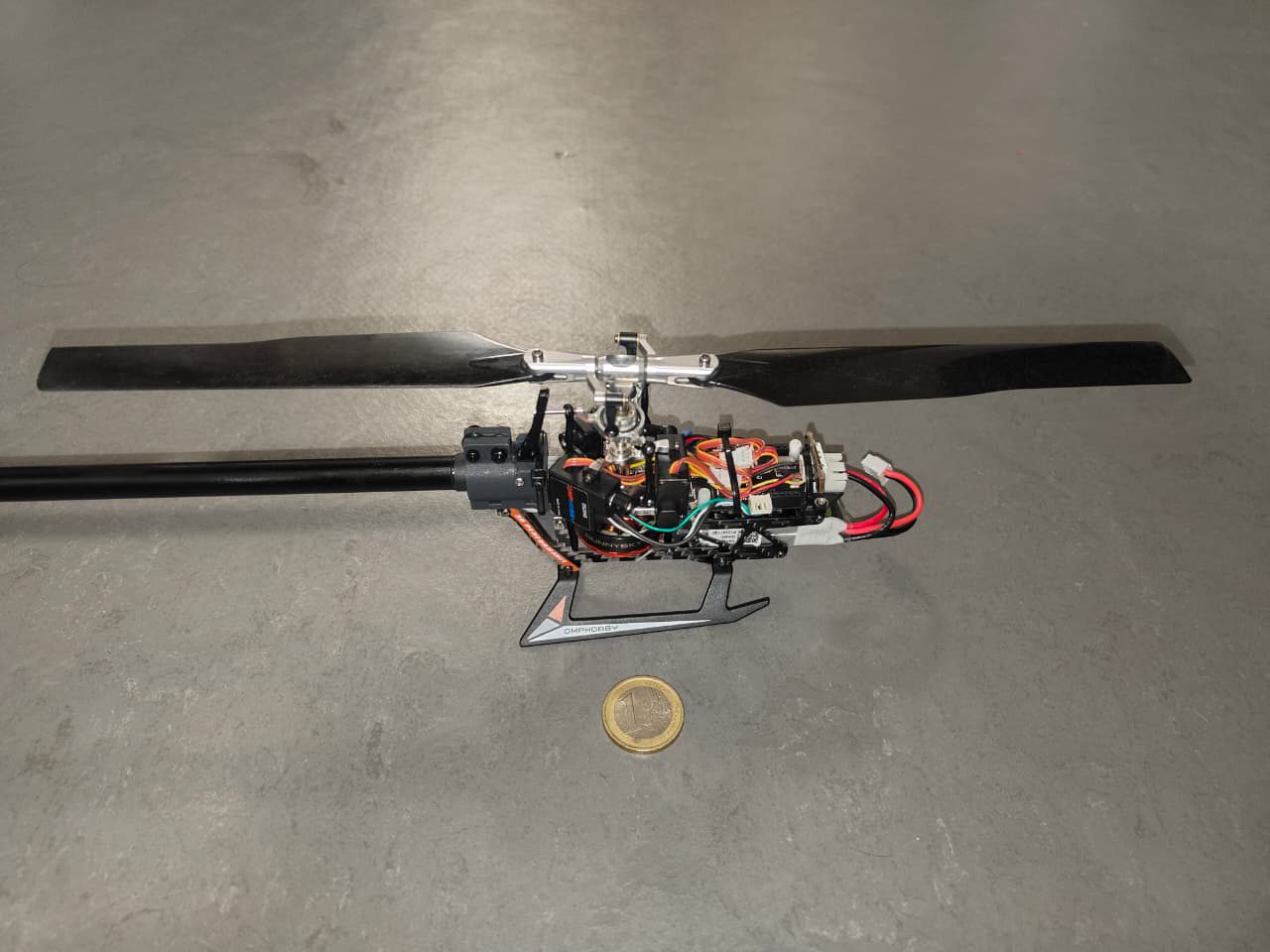
Our drone combines a tandem rotor with variable-pitch blades, a hydrogen-electric power system and software with GIS integration. The current 1:4 scale prototype, D.A.R.T., still flies on battery power. Building on it, we are developing the full-scale drone with hydrogen propulsion.
Platform
Two variable-pitch rotors are mounted one behind the other. The design aims for a favourable ratio of payload to maximum take-off mass, and the two rotor disks generate high lift within a narrow footprint. Adjusting the blade pitch allows thrust and attitude to be controlled quickly. The drone takes off and lands vertically.
Propulsion
A fuel cell on board converts hydrogen into electricity for the electric motors. A buffer battery supplies extra power for short peak loads. This is intended to enable flight times of several hours. The fuel cells use a modular 2.4 kW-class architecture, so the propulsion system can be scaled.
Autonomy and docking
The drone is designed to carry out missions autonomously, enabling persistent operations along infrastructure. Precise autonomous docking allows it to be deployed without staff on site. In future, the docking station is also intended to refuel hydrogen and service the batteries.
Sensors and data
The drone is designed for modular payloads: electro-optical and infrared (EO/IR) cameras, thermal cameras and LiDAR, as well as hyperspectral and multispectral sensors for remote sensing. The measurements are turned into geospatial data and inspection results that help you assess the condition of your infrastructure and plan maintenance.
Safety and certification
Achieved: The prototype has completed flight validation at technology readiness level 5 (TRL 5).
Planned: Operations in the EU Specific category based on a SORA 2.5 risk assessment. We are developing design compliance evidence against the applicable EASA requirements and will seek operational authorisation through the procedures of the German aviation authority.
Specifications
| Parameter | D.A.R.T. prototype (1:4 scale), design value | Full-scale drone (1:1), development target |
|---|---|---|
| Flight time | approx. 30 min | approx. 2.5 h |
| Range | approx. 10 km | approx. 100 km |
| Payload | approx. 0.25 kg | approx. 20 kg |
| Empty mass (without payload) | approx. 0.25 kg | approx. 25 kg |
| Maximum take-off mass | approx. 0.5 kg | approx. 45 kg |
| Cruise speed | approx. 40 to 50 km/h | approx. 60 to 70 km/h |
| Rotor diameter | 250 mm | approx. 2.0 m |
| Propulsion | battery-electric (lithium battery), variable-pitch tandem rotor | hydrogen-electric, variable-pitch tandem rotor |
| Operating temperature | −10 °C to +45 °C | −30 °C to +55 °C |
| Wind capability | under evaluation | to be validated in testing |
All figures are currently calculated, not measured. The prototype figures are design values, and the full-scale figures are development targets. We are confirming them step by step in tests and flight trials and will add measured values here as soon as they are available. The range is not a guaranteed operating radius, as this depends on reserves, mission profile, wind, payload, communications and regulatory constraints.
Want to know more about the technology?
Get in touch. We are happy to show you where the prototype stands today and where development is heading.